What the terms suggest
Informal usage implies a waste-like residue. In reality the material discussed here is a naturally occurring crude oil — dense and viscous, but a hydrocarbon feedstock, not refuse.
Non-affiliation notice: Independent company. No affiliation with President Donald J. Trump, the Trump family, the Trump Organization, the U.S. government, or the Venezuelan government.
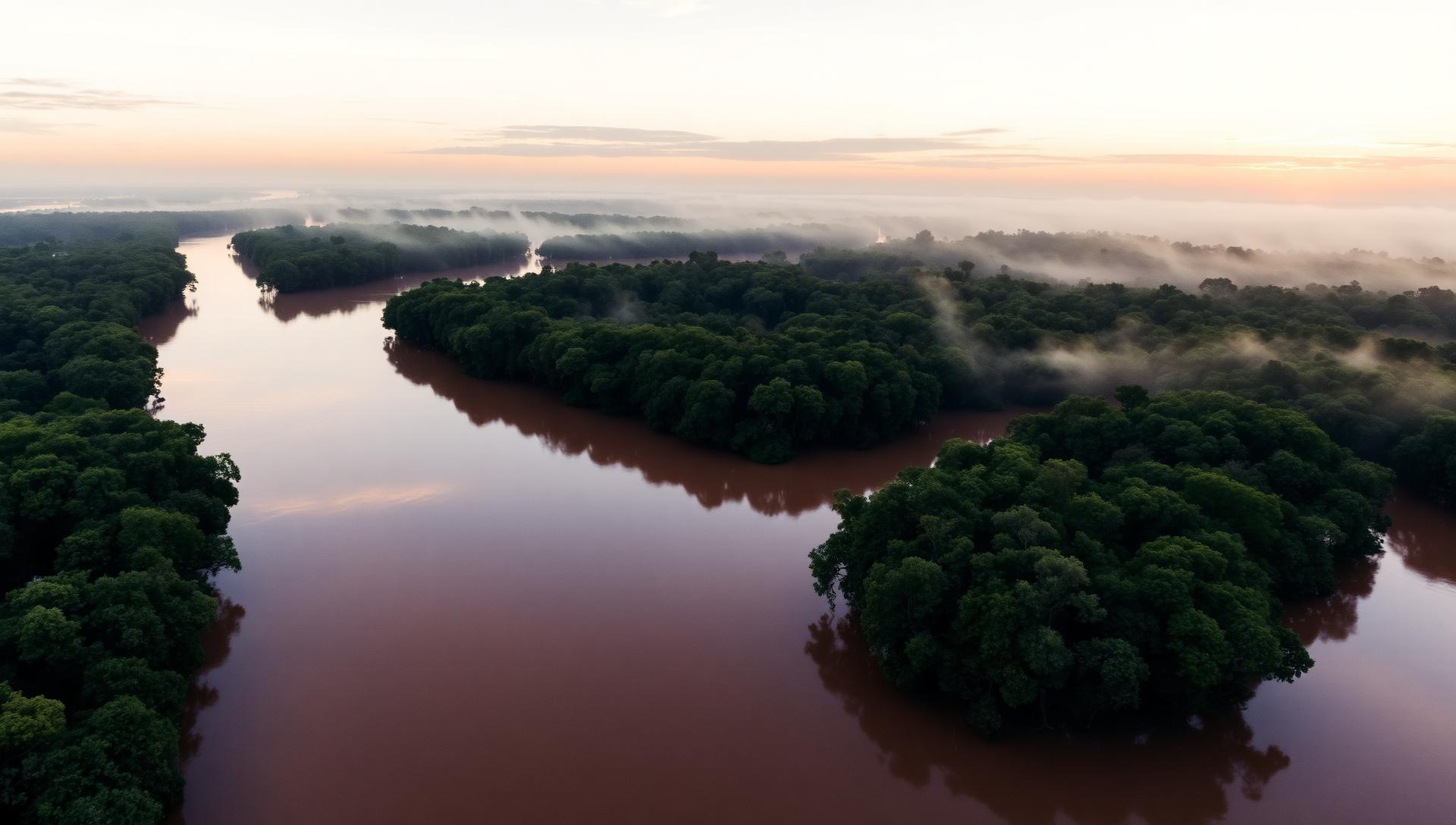 Orinoco River Delta
Technical Primer
Venezuela holds some of the world's densest, most viscous hydrocarbon resources. Handling them is an engineering problem before it is a commercial one. Nothing described here has been sourced, tested, contracted or acquired by Trump Oil.
Terminology
These colloquial terms appear in public discussion but do not correspond to any recognised industry classification. Using them can misrepresent both the material and the processing required.
Informal usage implies a waste-like residue. In reality the material discussed here is a naturally occurring crude oil — dense and viscous, but a hydrocarbon feedstock, not refuse.
Classification rests on measured properties: API gravity, kinematic viscosity at temperature, sulfur content, metals, asphaltene fraction, acid number and residue yield.
Configuration, transport method, blending strategy and commercial value all derive from measured assay data. Loose language leads to unrealistic technical and financial assumptions.

Physical Properties
Extra-heavy crude is characterised by low API gravity and very high viscosity at ambient temperature. It generally will not flow through conventional pipelines untreated.
Elevated sulfur content drives hydrotreating severity, hydrogen demand, sulfur recovery capacity, metallurgy selection and emissions control requirements. It also affects the commercial discount applied to the feedstock.
Nickel, vanadium and asphaltene content influence catalyst life, fouling behaviour, coke formation and residue-conversion strategy. These are determined by laboratory assay, never by assumption.
Processing Pathways
Two broad, non-exclusive conceptual routes exist. Which — if either — would be appropriate depends on assay results, site conditions, utilities, permits and economics.
Blending with naphtha or another light diluent to create a transportable stream. Requires reliable diluent supply, blending control, recovery logistics and quality verification at each custody point.
Partial or full conversion of heavy fractions — for example through residue conversion or delayed coking — to produce a lighter, more stable stream. Capital and utility intensive, and highly sensitive to feedstock characterisation.
Proposed Framework
If the project ever advances, the following disciplines would be established before any material is handled. None are in place today.
Disclosures